New Build Stage Inspections Brisbane (2026 Guide) | Pre-Slab to PCI | BSPI
Building in Brisbane? Learn what each construction stage means, when to inspect, and which stage inspections matter most before paying progress claims.
2/8/20264 min read
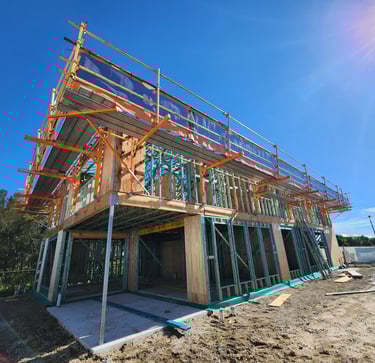
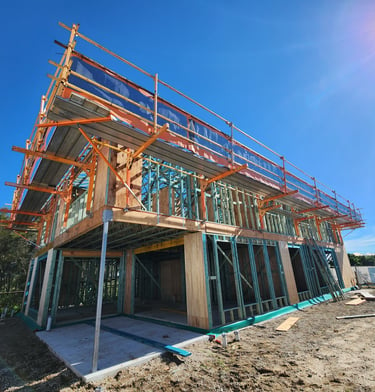
New Build Stage Inspections in Brisbane (2026 Guide)
What Each Stage Means — And When You Should Inspect
When you’re building in Brisbane, your builder will issue a progress claim when they believe a stage is complete.
That does not automatically mean the stage is complete, compliant, or ready to be permanently covered.
This guide explains — clearly and contract-aligned — what each stage actually means, when to book your inspection, and what matters at each point.
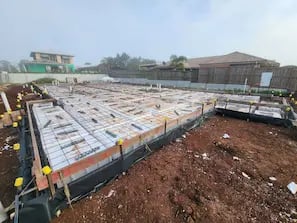
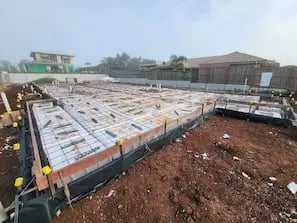
1. Pre-Slab Inspection (Before Concrete Pour)
What this stage includes
Site cut and set-out
Footings and edge beams formed
Reinforcement installed
Under-slab plumbing
Termite management system
Slab setdowns (wet areas, garage, etc.)
Concrete is usually booked weeks in advance.
When to book
Book as soon as your site supervisor confirms the pour date.
Inspection should be carried out the day before concrete arrives.
Why it matters
Once the slab is poured, structural elements are permanently hidden.
Common issues found at this stage:
Incorrect footing dimensions
Reinforcement placement errors
Plumbing penetrations incorrectly located
Missing termite collars
Incorrect setdowns
Slab edge clearance planning issues
If you only choose one structural inspection — this is it.
2. Frame Stage (Structural Frame Complete)
What this stage means
Wall frames erected
Trusses installed
Structural bracing installed
Tie-downs installed
This is the structural skeleton only.
Why inspect here?
Once linings go on, the structure is concealed.
Common issues:
Out-of-plumb walls
Missing or inadequate bracing
Inadequate or non-compliant tie-downs
Incorrect truss restraints
Frame overhang issues
Openings and frames not matching plans
This stage verifies the structure before it’s covered.
3. Frame + Rough-In Stage (Pre-Lining Stage)
What this stage means
Roof covering installed
Windows installed
Plumbing rough-in complete
Electrical rough-in complete
Aircon rough-in complete
Services visible but not lined
Frame straightened and 100% complete.
This is effectively the last open structural/services stage before insulation and plasterboard.
Why this stage is critical
Everything is still visible.
Common issues:
Services drilled through structural members
Incorrect pipe grading
Penetrations not sealed
Missing supports or noggins
Wet area setdowns and bath hobs incorrect
Trade coordination conflicts
out of plumb walls
Once insulation and plasterboard are installed, defects become much harder to identify or prove.
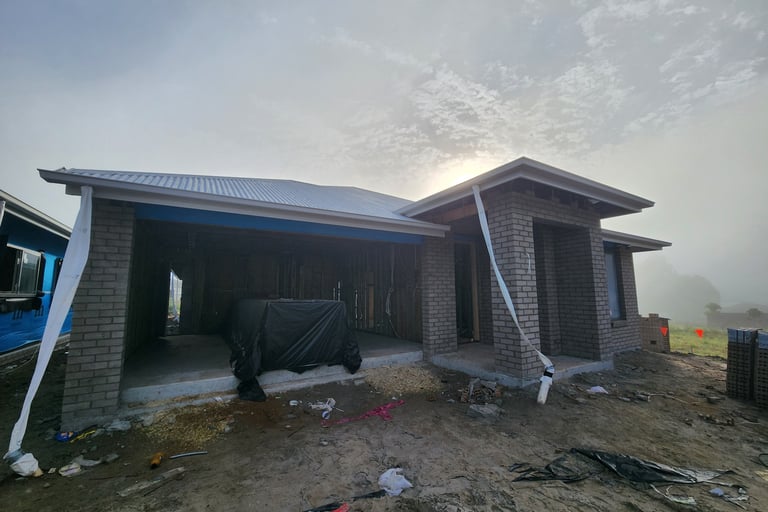
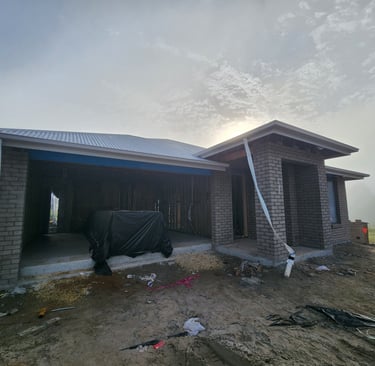
4. Enclosed Stage (Weather-Tight)
What this stage means
Roof installed
Windows installed
External wall linings complete (brick, cladding, etc.)
House is weather-tight
This stage focuses on the building envelope.
What matters here
Flashings correctly installed
Window sill flashing
Weep holes
Slab edge exposure
External penetrations
Brisbane weather tests envelope compliance quickly.
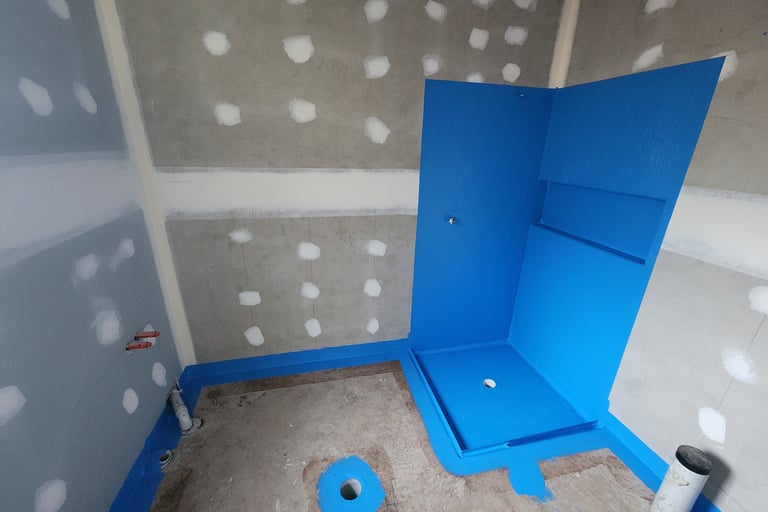
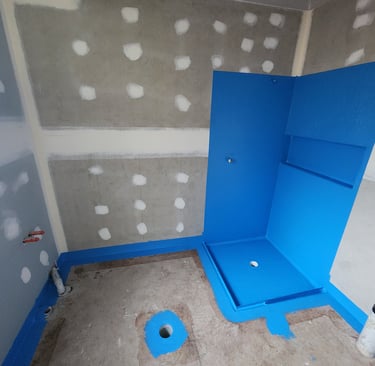
5. Waterproofing Stage (Before Tiles)
What this stage means
Membrane applied to wet areas
Bond breakers installed
Shower and bath areas prepared
No tiles laid yet
Why this stage is critical
Tiles do not stop water. The membrane does.
Common issues:
Incorrect terminations
Missing bond breakers
Poor puddle flange detailing
Insufficient coverage
Incorrect curing
Very common issue on Brisbane sites:
Membrane damaged by other trades.
All it takes is a nail or screw left on the membrane and someone stepping on it.
That puncture gets tiled over.
Inspection must be carried out before tiles are laid.
6. Fixing Stage (Internal Fit-Off – Wet Areas Tiled)
What this stage means (contract-aligned)
Internal linings complete
Architraves and skirtings installed
Cabinetry installed
Wet areas tiled
This is not final finish.
Door hardware is typically installed after fixing.
Silicone completion is generally later.
We assess the stage in line with contractual expectations — not cosmetic overreach.
What matters at fixing
Cabinet alignment and installation
Tile installation quality (lipping, drummy tiles)
Wet area set-outs
Installation compliance
Visible installation defects
Fixing stage is a very good inclusion in your minimum inspection package.
7. Practical Completion Inspection (PCI)
This is the final inspection before handover and final payment.
What this stage means
The builder considers the home complete and ready for occupation.
This is your strongest contractual position before releasing final funds.
What is checked
Functional operation of windows and doors
Plumbing leaks (very important)
Drainage
Appliances
Fixtures and fittings
External works
Visible defects
Plumbing leaks are commonly picked up at PCI.
8. Re-Inspections
Re-inspections can be carried out at any stage upon request.
Most inspection companies are happy to assist with:
Confirming structural rectifications
Verifying waterproofing repairs
Checking PCI defect completion
This ensures rectification works are properly completed — not cosmetically patched.
9. Warranty / Maintenance Period Inspection
This inspection is carried out before your maintenance period expires.
Why it’s important
Over time, issues can appear:
Movement cracking
Door and frame settlement
Waterproofing failures
Drainage issues
External movement
It is also common for builders to downplay defects or delay rectification discussions until the maintenance period is nearly over.
A warranty inspection acts as an overall health check of the build before your contractual protection window closes.
If Budget Is Tight – Minimum Recommended Inspections
For Brisbane builds, the strongest minimum package is:
Pre-Slab
Frame
Enclosed
Waterproofing
Fixing
Practical Completion
Adding Rough-In and Enclosed strengthens your position further.
When Should You Book?
Pre-slab: As soon as pour date confirmed (inspection day before pour)
Frame: Once trusses and tie-downs installed
Rough-in: Before insulation and plasterboard
Enclosed: When the external walls are lined.
Waterproofing: Before tiling
Fixing: After wet areas tiled
PCI: Before signing final walk through documents
Warranty: Before maintenance period expires
Building in Brisbane in 2026
Fast build programs, reactive soils, heavy rainfall, and tight scheduling mean timing matters.
Stage inspections aren’t about conflict.
They’re about verifying compliance before work is covered and payments are released.
If you’re building in Brisbane or surrounds and want independent, stage-aligned inspections at the right time, that’s exactly what we do.
If there’s a specific stage you’d like to learn more about, click the link below to explore that section on our blog.