Frame Stage vs Pre-Plaster Inspection: When to Book Each
Learn the difference between a frame stage inspection and a pre-plaster inspection, when to book each, and why timing matters for Brisbane home builds.
4/25/20262 min read
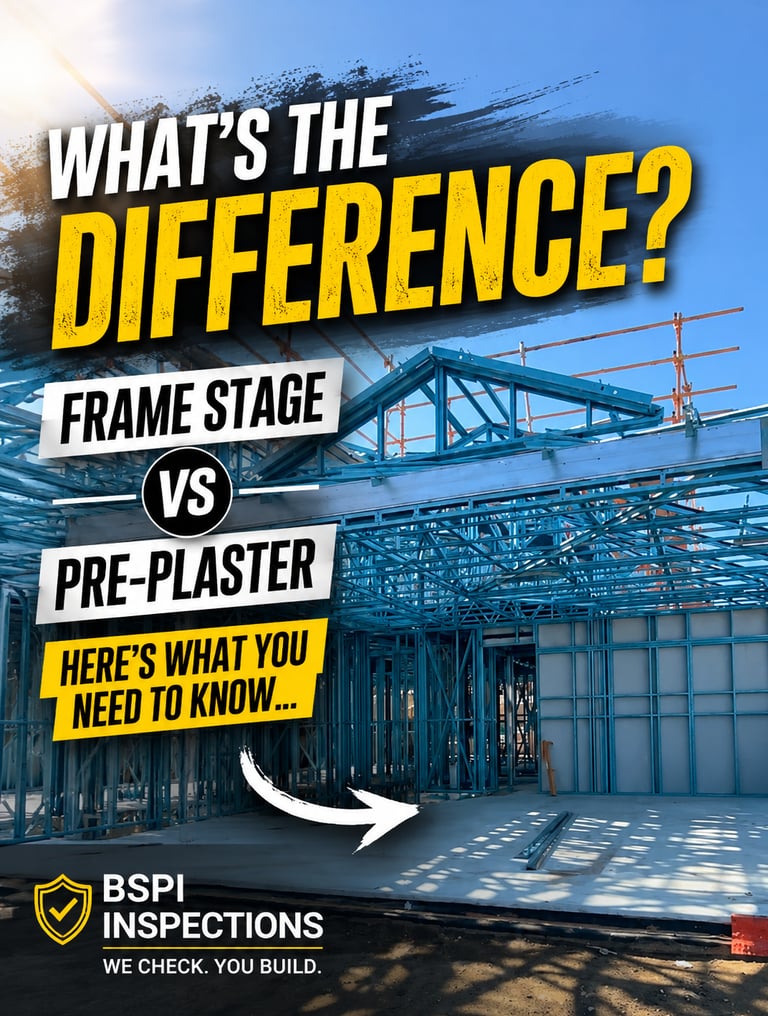
Frame Stage vs Pre-Plaster Inspection: What's the Difference?
If you're building a new home, you've probably heard the terms frame stage inspection and pre-plaster inspection. Many people assume they're the same inspection, but they're actually carried out at different stages of the build and serve different purposes.
To give you a quick overview, we've put together the short video below explaining the difference.
▶️ Watch the video before reading on.
What Is a Frame Stage Inspection?
A frame stage inspection is generally carried out once the carpenters have finished constructing the frame and before the builder's frame stage payment is made.
At this point, the builder is usually claiming the Frame Stage under your building contract.
One of the key purposes of this inspection is to determine whether the builder has actually achieved the frame stage in accordance with the contract before you release the next progress payment.
During the inspection, we also check items such as:
The overall quality of the frame installation
Compliance with the approved plans
Wall plumbness and straightness
Roof trusses and structural framing
General workmanship
Any obvious defects that should be addressed before construction continues
This is your opportunity to identify issues while the frame is still completely visible and easy to access.
What Is a Pre-Plaster Inspection?
A pre-plaster inspection is carried out weeks later, after the rough-in trades have completed their work.
By this stage, the following is generally complete:
Plumbing rough-in
Electrical rough-in
Air-conditioning rough-in
Other service penetrations
The frame has often already been certified as structurally compliant earlier in the build. However, it's common for trades to make alterations while installing their services.
This is why a pre-plaster inspection is so valuable.
We re-inspect the frame to ensure it remains:
Square
Plumb
Straight
In accordance with the approved plans
before it's permanently covered by brickwork or plasterboard.
Once the walls are lined, many defects become difficult—or impossible—to identify without destructive work.
Do You Need Both?
Not necessarily.
If your budget only allows for one inspection, the best option depends on your priorities.
A frame stage inspection focuses on confirming the builder has genuinely reached the frame stage before claiming payment while also assessing the quality of the structural framing.
A pre-plaster inspection provides a final opportunity to inspect the completed frame after all rough-in trades have finished, ensuring nothing has changed before the home is closed in.
Many clients choose to have both inspections for maximum peace of mind, as each inspection serves a different purpose.
Why Timing Matters
The biggest mistake we see is homeowners booking an inspection too late.
Once insulation, brickwork or plasterboard has been installed, many framing defects are no longer visible.
The earlier issues are identified, the simpler—and usually cheaper—they are to rectify.
Building a New Home in Brisbane?
At BSPI Inspections, we provide independent stage inspections throughout Brisbane, including:
Pre-Slab Inspections
Frame Stage Inspections
Pre-Plaster Inspections
Enclosed Stage Inspections
Waterproofing Inspections
Practical Completion (PCI) Inspections
Each inspection provides an independent assessment so you can make informed decisions throughout your build.
If you're unsure which inspection is right for your stage of construction, contact BSPI Inspections and we'll help you determine the most appropriate time to inspect your home.
If there’s a specific stage you’d like to learn more about, click the link below to explore that section on our blog.