Why Stage Inspections Matter in Brisbane | Real 2026 New Build Example
A real example from a Brisbane new build this week shows why stage inspections matter before practical completion. Learn how visible defects can be picked up before handover.
4/25/20264 min read
Building a new home is exciting, but it can also be stressful when you start noticing things that do not look quite right.
Some defects are hidden behind walls, under slabs, or inside wet areas.
Others are sitting right in front of you.
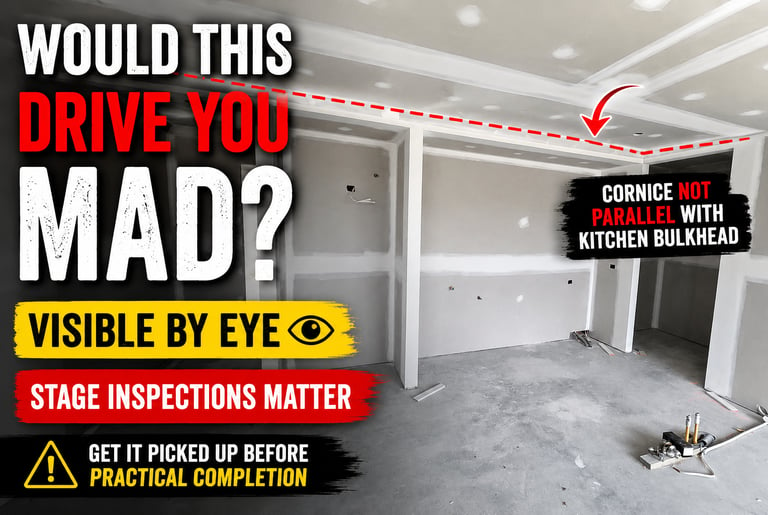
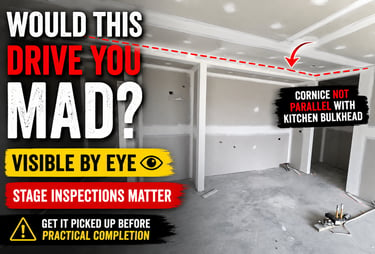
This week on a Brisbane new build site, we came across a kitchen bulkhead and cornice line that was visibly not running parallel. It was noticeable by eye from a normal viewing position.
It might sound like a small issue during construction, but once the kitchen is finished, painted, and handed over, this could be something the homeowner sees every single day.
While sitting at the kitchen bench with a morning coffee.
While entertaining guests.
While standing in one of the most used rooms in the home.
That is exactly why stage inspections matter.
Video Example From This Week
The Real Site Example: Cornice Not Parallel With Kitchen Bulkhead
During the inspection, the cornice was observed not to be running parallel with the kitchen bulkhead.
This was not something that needed special equipment to notice. It was visible by eye from a standard viewing position.
In a finished kitchen, straight lines matter. Bulkheads, cornices, cabinetry, ceilings, splashbacks and benchtops all work together visually. When one of these lines is out, it can stand out quickly.
This is the type of issue that may not be considered a major structural concern, but it can still affect the overall finish and presentation of the home.
And for the owner, that matters.
Why This Type of Defect Can Be Frustrating After Handover
A kitchen is not a hidden area of the home.
It is usually one of the most used spaces in the house. It is where people make coffee, prepare meals, talk with family and entertain guests.
If a cornice line or bulkhead is visibly out of alignment, it can become one of those things the owner notices every day.
The frustration is not just the defect itself.
The frustration is often thinking:
“Why was this not picked up earlier?”
That is where independent stage inspections can help.
Why Stage Inspections Matter During a New Build
Stage inspections are about checking the home at key points throughout construction, not just at the very end.
By the time practical completion comes around, many parts of the build are already covered, painted, tiled or fitted off.
That does not mean issues cannot be raised at practical completion, but some defects are easier to review and rectify earlier in the build.
A staged inspection process gives homeowners an extra set of eyes before important parts of the home are covered or finished.
Common stages include:
Pre-slab inspection
Frame inspection
Rough-in inspection
Enclosed or lock-up inspection
Waterproofing inspection
Fixing stage inspection
Practical completion inspection
Each stage gives a different opportunity to inspect the build before the next layer of work begins.
Why Frame and Rough-In Inspections Are Important
Frame and rough-in inspections are especially important because they happen before plasterboard and internal linings cover key areas.
At frame stage, items such as wall alignment, framing, bracing, tie-downs, bulkheads and general workmanship can be reviewed before they are sheeted.
At rough-in stage, there is another opportunity to inspect before internal linings are installed. This can include checking areas around services, plumbing, electrical rough-ins, framing changes and any previous items that may need another look.
Once plasterboard goes on, a lot of the structure and preparation work is no longer visible.
That is why getting the timing right matters.
Practical Completion Is Important, But It Should Not Be the Only Inspection
A practical completion inspection is still very important.
It is often the last major opportunity to document visible defects before handover. This can include paint, plaster, doors, cabinetry, tiling, drainage, external finishes and general workmanship.
However, relying only on practical completion means many earlier construction details may already be hidden.
That is why stage inspections throughout the build can be so valuable.
The goal is not to create drama or delay the builder. The goal is to document the build at the right stages and help the owner raise concerns before handover.
“Visible By Eye” Defects Still Matter
Not every issue needs to be highly technical to be important.
Sometimes the most frustrating defects are the ones you can see every day.
A cornice not running parallel with a kitchen bulkhead is a good example.
It may not be the biggest defect on site, but if it is visible by eye from a normal position, it may affect the homeowner’s satisfaction with the finished product.
If you are not happy with something, it is better to raise it before practical completion and handover rather than living with it afterwards.
Brisbane Stage Inspections: Get It Checked Before It Gets Covered
This real example from a Brisbane site this week is a simple reminder that stage inspections are not just about major structural defects.
They are also about workmanship, finish, alignment, and making sure visible issues are picked up at the right time.
For homeowners building in Brisbane and surrounding areas, independent stage inspections can provide peace of mind throughout the build.
At BSPI Inspections, we assist with new home stage inspections across Brisbane and South East Queensland, including frame inspections, rough-in inspections, fixing stage inspections and practical completion inspections.
Don’t miss your stage inspections.
Get it picked up before practical completion.
Book a Stage Inspection in Brisbane
Building a new home in Brisbane or surrounding areas?
BSPI Inspections provides independent stage building inspections to help homeowners document their build and identify defects before handover.
Book your stage inspection with BSPI Inspections today.
If there’s a specific stage you’d like to learn more about, click the link below to explore that section on our blog.